End of The Year
2025
From the Founders' Desk
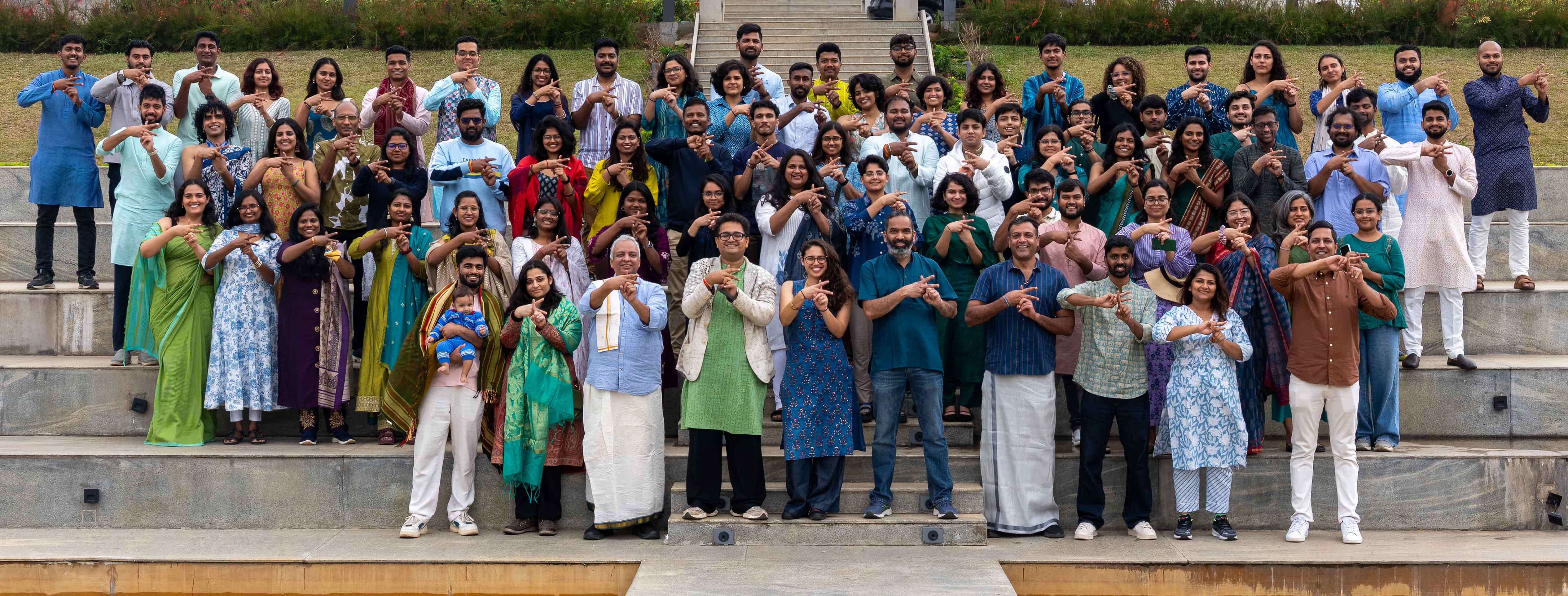
Karya’s mission is to leverage the AI revolution to create dignified earning and learning opportunities for low-income communities around the world. We work at the intersection of frontier AI innovation and human-centred digital work, enabling communities that have historically been excluded from the AI economy to meaningfully participate in shaping it. As we expand across geographies and contexts, our focus remains on advancing language technologies for underrepresented communities while building an AI ecosystem that is equitable, inclusive, and community-driven.
By every measure, 2025 was a meaningful year for Karya. In India, we expanded our workforce from just over 50,000 workers to 130,000 workers. With various partners, we expanded our presence globally through ongoing deployments in Kenya and Ethiopia, and pilots in South Africa and Bangladesh. Wages directly distributed to our communities grew 6.8× year-on-year, bringing cumulative wages distributed to over USD 3.2 million. During the year, we successfully completed two of the most complex projects in our history and initiated several new, high-impact engagements in partnership with leading AI labs and institutions such as Microsoft Research, Anthropic, Google DeepMind, OpenAI, and the Government of India.
Samiksha, a flagship initiative launched in 2025, emerged from a simple but critical insight: many AI evaluations rely on benchmarks that are disconnected from how people actually use these systems in real-world contexts. Developed in collaboration with researchers from Microsoft Research India and the Collective Intelligence Project, Samiksha aims to re-centre evaluation around lived experience and societal relevance. Working closely with community members, we conducted one of the largest public, community-led evaluations of AI models to date, collecting over 20,000 real-world queries across several critical domains. Our paper describing the first Samiksha pilot was accepted to the CHI 2026 conference, highlighting Karya’s commitment to rigorous academic research.
In an era where datasets increasingly shape the tools that mediate daily life, Karya has also invested in preserving forms of cultural knowledge too often left outside formal archives. Our Indigenous Recipes Project documented food knowledge, environmental memory, and seasonal practices across 10 districts and dialects of East and Northeast India. Our paper describing the methodology and results was accepted at the AACL conference. We also turned a fraction of the 1000+ recipes into a unique recipe book, a collection shaped as much by memory and lived experience as by method, reflecting how families read the land, respond to uncertainty, and preserve what matters.
2025 also marked significant growth in our partnerships with the Government of India. Through several new projects, we worked closely with government bodies to build and open source critical, contextual datasets and other digital public goods. We are deeply grateful for this collaboration and are excited to be presenting several of these initiatives at the India AI Impact Summit in February in Delhi.
Through 2025, we strengthened our leadership team with the addition of several senior leaders across key functions. With their support, we significantly deepened our organisational capabilities—from programme delivery and research to operations, partnerships, and impact measurement. As a result, we are confident that we now have the experience, discipline, and institutional capacity required for our next phase of growth.
None of this progress would be possible without the trust and support of our donors, clients, partners, mentors, and fellow impact organisations. We are deeply grateful to everyone who has walked this journey with us. While there is still much work ahead, we enter 2026 with clarity, commitment, and optimism for what lies ahead.
Safiya, Manu, & Vivek
2025
In Numbers
134,565
workers onboarded on Karya Platform*
*as of Jan ‘26
58.1%
workforce is women*
*as of Jan ‘26
28
states in India covered
USD 3.2 M
paid in direct wages to our workers so far
6.8X
year-on-year increase in worker wages
5
countries our platform has been deployed in*
*Including India, Kenya, Ethiopia, South Africa, and Bangladesh
70
languages in which we have built datasets
65
million tasks completed on the platform
Year on year, we have expanded both the scale of its workforce and the volume of wages distributed, while steadily broadening the range and quality of earning and learning opportunities available to worker.
My life was always joyful, but it was more limited in terms of time and space. After Karya, my confidence has increased and my earning opportunities have also grown. I can manage some of my own and my family’s daily expenses. In some ways, earning money through Karya has become easier, but in some cases, it is not always easy. It takes effort and time.
Binita Bhuyan, Assam , Data Validator
USD 1500 earned so far

2025
Highlights
January
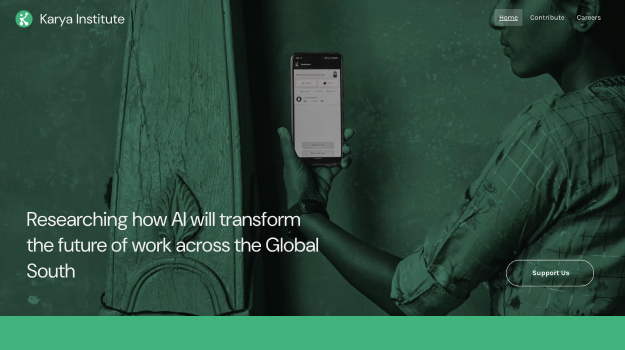
Karya Institute
We launched the Karya Institute, an internal research and policy unit focused on shaping inclusive AI and dignified digital work from the Global South.
February
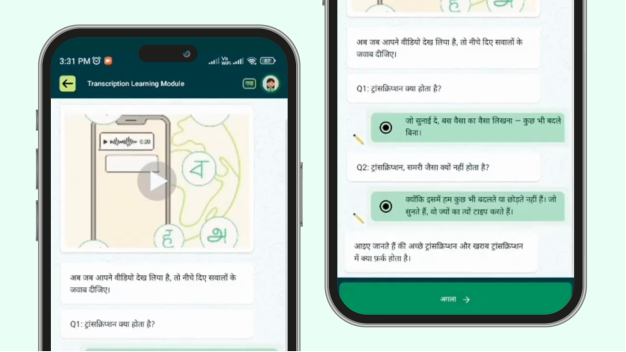
Karya Learn
We initiated Karya Learn, a skilling initiative designed to sit alongside paid work and prepare workers for more complex digital tasks.
April

LinkedIn’s Future of Work Fund
We became one of a small number of organisations supported by LinkedIn’s Future of Work Fund. This support is intended to enable the delivery of skilling certifications and learning modules for Karya’s workforce.
Skoll World Forum
Our leadership participated in the Skoll World Forum in Oxford, contributing to discussions on philanthropy, technology, and inclusion.
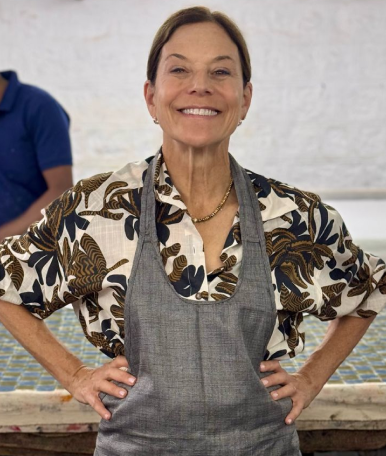
Gina Sanders at Karya Office
We hosted our long-time supporter Gina Sanders at our Bengaluru HQ and organised a sector convening for our philanthropic partners and ecosystem peers.
May
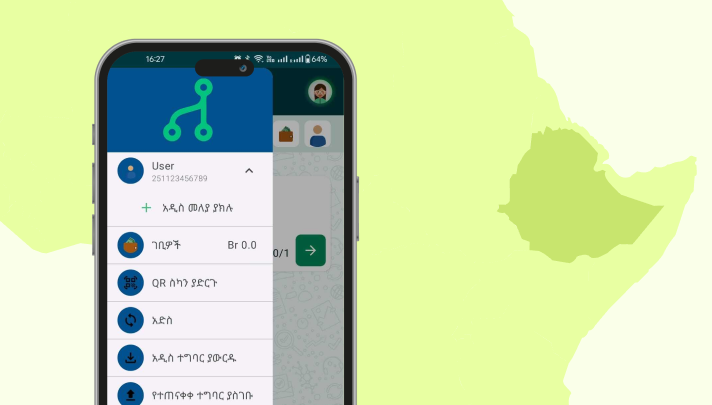
Platform by Karya in Africa
We expanded Platform by Karya deployments through ongoing work in Ethiopia (with Leyu) and Kenya (with Digital Green), testing the platform’s adaptability across different contexts.
100,000+ Workers
We crossed 100,000 workers on the Karya platform.
Project Vaani Concluded
Project Vaani, which began in 2023, concluded after engaging nearly 48,000 contributors across 33 districts.
June
Global expansion with Mastercard
We partnered with the Mastercard Centre for Inclusive Growth to pilot the Platform-as-a-Service (PaaS) model across sub-Saharan Africa, Southeast Asia and Latin America.
July

Completed Phase II of Project Sanmati
Worked with 20,000 women across 8 states to collect data and co-create frameworks to mitigate gender-bias across 6 Indian languages, leading to the creation of one of the largest gender-intentional Indian-language datasets.
USD 1.29M in Worker Wages
We distributed USD 1.29 million in direct wages to our communities in just 6 months from January - July 2025, creating a new org-record.

Project Euphonia
We supported Project Euphonia, a Google-led initiative focused on improving speech recognition for atypical speech patterns.
August

Welcoming Mozilla Foundation
A new partnership was established with the Mozilla Foundation, supporting work across conversational data.
Welcoming Target Foundation
Target Foundation came onboard to strengthen Karya’s digital skilling work, expanding pathways that help workers navigate the digital economy with greater confidence and choice.
September
Featured by Google.org
We were thrilled to be mentioned in the Fast Forward report - The Philanthropic Reset: How Philanthropy Can Lead in the Age of AI - at the United Nations General Assembly by Google.org
November
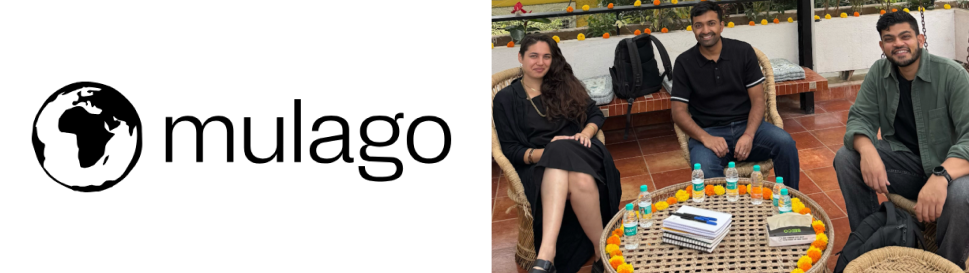
Mulago Foundation Visit
We welcomed members of the Mulago team at our Bangalore Office, where we dove deep into our model and discussed strategies for scale.
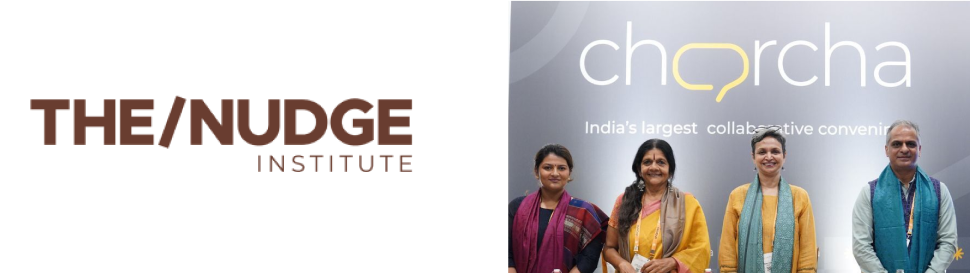
Charcha by The/Nudge
We participated in panel discussions at The/Nudge’s Charcha on digital work and livelihoods.

Project Nandurbar
We started work on Voice based AI assistant for Tribal languages in the Nandurbar district in the state of Maharashtra.
Karya Hackathon
We hosted an internal hackathon that brought teams together for a 48-hour sprint on 2026 prototypes.
December
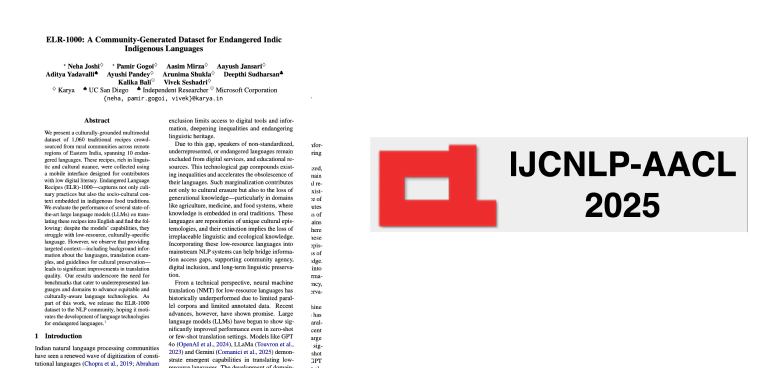
ELR-1000
We presented the Endangered Language Recipes research paper at the IJCNLP-AACl Conference, Mumbai.

Samiksha Roundtable on Inclusive AI
We launched Samiksha Community Evals results at an official IndiaAI Pre-summit event.
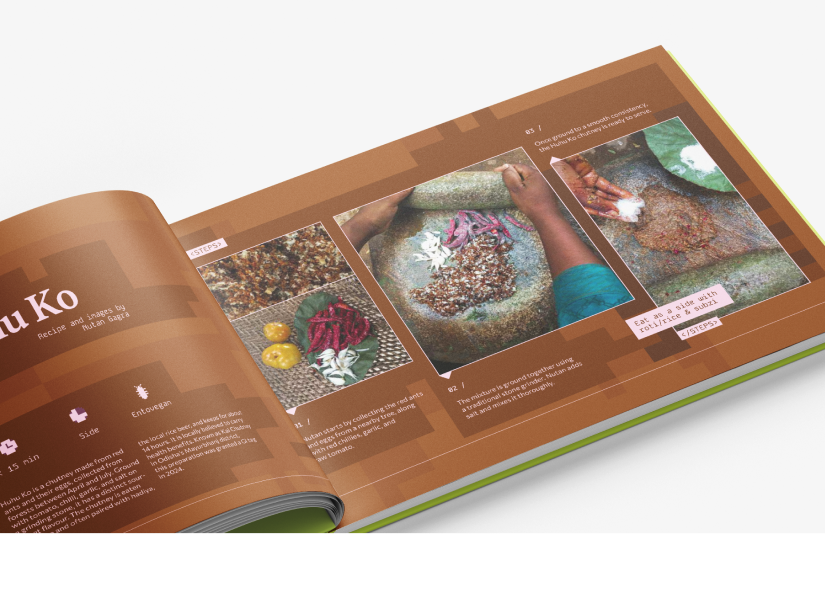
Karya’s Recipe Book
We published Karya’s Recipe Book, amplifying regional knowledge and worker voices.
View Entire Timeline
I was a student and depended fully on my family. After joining Karya, I can now cover my own expenses and feel truly self-reliant. After that, even my friends started joining Karya. My mom supported me throughout, and I used to explain the project details to her. She eventually worked in the Sanmati project as well. The more I work, the more I earn, and it has shown me that genuine and trustworthy online jobs do exist. I’ve also learned a lot about AI, and now I use chatbots and explore technology with much more confidence.
Anila Achankunju, Kerala
USD 464 earned so far

2030
-
2030
-
2030
-
2030
-
2030
-
2030
-
2030
-
2030
-
2030
-
2030
-
2030
-
2030
-
2030
-
2030
-
2030
-
2030
-
2030
-
2030
-
2030
-
2030
-
2030
-
2030
-
2030
-
2030
-
Vision
2030
We developed a five-year growth plan in collaboration with Bridgespan to advance a world where better livelihoods shape better AI. The plan scales Karya’s impact across three pathways: direct impact in India, global replication through our platform, and thought leadership advancing dignity and equity by 2030.
Pathway 1
$100M in wages in India
Bring $100M in wages to low opportunity Indian workers on our platform, with a focus on deepening our impact through skilling and connecting our workers to continued work.
Pathway 3
Thought leadership
Conducting research across AI, markets, labour, and skilling to build a replicable blueprint for improving livelihoods through ethical digital work and sharing our learnings through Digital Public Goods.
Pathway 2
$1B via our Platform, globally
Scale through our Platform, where we will enable other organisations to disburse an additional $1B in wages.
2030
-
2030
-
2030
-
2030
-
2030
-
2030
-
2030
-
2030
-
2030
-
2030
-
2030
-
2030
-
2030
-
2030
-
2030
-
2030
-
2030
-
2030
-
2030
-
2030
-
2030
-
2030
-
2030
-
2030
-
Vision
2030
We developed a five-year growth plan in collaboration with Bridgespan to advance a world where better livelihoods shape better AI. The plan scales Karya’s impact across three pathways: direct impact in India, global replication through our platform, and thought leadership advancing dignity and equity by 2030.
Pathway 1
$100M in wages in India
Bring $100M in wages to low opportunity Indian workers on our platform, with a focus on deepening our impact through skilling and connecting our workers to continued work.
Pathway 2
$1B via our Platform, globally
Scale through our Platform, where we will enable other organisations to disburse an additional $1B in wages.
Pathway 3
Thought leadership
Conducting research across AI, markets, labour, and skilling to build a replicable blueprint for improving livelihoods through ethical digital work and sharing our learnings through Digital Public Goods.
The years ahead will require careful calibration—between growth and safeguards, between demand and worker capacity, and between ambition and evidence. The intent is to remain anchored in practice while extending reach thoughtfully.
By 2030, we aim to show that only when communities build and shape AI systems for themselves, can those technologies be fair, inclusive, and useful at global scale.
Building our demonstration model in India
In 2025, our work in India focused on executing large, complex projects and consolidating what delivery at scale looks like in practice. Two long-running initiatives reached completion during the year. We partnered on Project Vaani, one of the largest datasets of Indian dialects ever to exist, engaging over 48,000 workers in large-scale language data creation. The datasets will be open sourced with the aim of supporting the development of more inclusive language technologies. Project Sanmati concluded its data collection phase after working with 20,000 low-income women across multiple states to identify and document gender bias in Indian-language datasets.
Alongside this, we began shifting attention toward new areas of work where demand and complexity are increasing, including conversational speech data, transcription, evaluations, and egocentric data collection. Across projects, workers completed 23 million digital tasks during the year, reflecting both scale and sustained participation. Learning and skilling progressed alongside delivery through Karya Learn, which was developed to support workers as they moved into more complex tasks while remaining engaged in paid work.
We are grateful for the opportunity to work with public institutions on projects that test how digital work can be delivered at scale. Government partnerships formed an important part of this work. New collaborations included a BIRAC and Grand Challenges India–supported project with the Karnataka Health Promotion Trust. We worked with local healthcare workers to build contextual datasets and technologies for adolescent health. In Nandurbar district, we began work with the Maharashtra State Government on a multilingual, voice-based AI assistant for tribal languages, with local contributors shaping the underlying data.
Together, these efforts represent the current state of Karya’s demonstration model in India—grounded in delivery, working at scale, and still evolving.
Read More
From India to the World
Platform by Karya became operational this year, enabling external organisations to use Karya’s technology to run ethical digital work projects in their own contexts. Pilots outside India, including work in East Africa, tested how the platform performs across languages, regulatory environments, and labour contexts. Project teams in Kenya and Ethiopia are designing tasks, onboarding workers, and managing quality and payments within a shared set of safeguards covering consent, wages, and grievance handling.
To support use across different contexts, Karya adapted its platform in three ways. A plug-and-play architecture was introduced to enable seamless integration with external systems such as payments and worker authentication. The Android application was localised across multiple languages, allowing participation from diverse communities. Regional hosting was also implemented to support data collection within different regulatory environments while maintaining data sovereignty.
These engagements helped clarify what requires localisation and what must remain consistent. Platform by Karya is now a central mechanism through which we aims to extend its model globally while maintaining accountability to workers.
We focus on finding like-minded partners who will provide fair-paying, digital work opportunities to underrepresented workers, globally.
Thought Leadership
Pathway 3 focuses on building public-interest infrastructure for AI—shared standards, evaluation tools, and evidence that can be used beyond any single organisation. It treats accountability, safety, and fairness as systems that must be designed and tested, not assumed. This work centres lived experience, ensuring that how AI is governed reflects how it is actually used. The aim is to strengthen the foundations on which responsible AI can operate at scale.
Samudaye
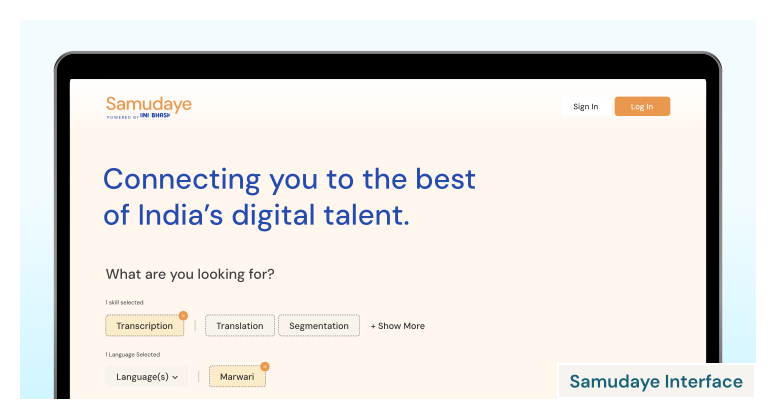
As India’s AI ecosystem expands, questions of who gets to participate - and on what terms - remain unresolved. Samudaye was created as a response to this: a platform designed to bring low-income and rural digital workers into the centre of India’s digital economy, rather than leaving them at its edges.
Many of these workers have long been ready for formal opportunities, yet remain scattered and largely invisible—even as governments, researchers, and enterprises seek reliable and diverse talent to support new AI systems. Samudaye, named after the Sanskrit word for “collective”, is being built in partnership with The/Nudge Institute and the Gender x Digital Hub at LEAD, Krea University, for the Government of India.
The platform is designed to enable workers to receive fair-paying tasks directly from public and non-government entities, with wage transparency, living-wage benchmarks, skill certification, and clear standards of engagement that will be built into its structure. As Samudaye moves toward a June 2026 launch, the focus remains on building a transaction-ready system that is fair, accountable, and inclusive.
Samudaye enables workers to receive verified tasks directly from public and non-government partners.
Our Code of Conduct
This year, we worked with Aapti Institute to develop a Code of Conduct for ethical data work. The process focused on formalising principles we aspire towards—fair pay, informed consent, grievance redressal, and complete transparency—into a clear, business-facing framework with operational standards.
The Code provides guidance for the digital work ecosystem, setting expectations around how workers are engaged and how decent and dignified working conditions can be sustained at scale. It is designed to be practical rather than aspirational, linking ethical commitments directly to day-to-day project practices.
Beyond its external role, Karya has already begun using the Code internally as a tool for reflection and improvement. It helps surface areas where operational processes can become more worker-centred and serves as a recurring reference point for recentering decisions around dignity and accountability as the organisation grows.
Read More
Our
Leaders
Head of Operations
Oversees field operations to ensure reliable execution at scale. Previously managed operations for the Tuberculosis Mission and the Bihar State Livelihoods Mission.
I was a fully occupied housewife, with children to look after. I couldn’t go out to earn, and it made me feel bad that I couldn’t support my family. With Karya, I can now take care of my own small needs and my children’s needs without depending on my husband. At times, I was even able to support him financially. The work is flexible — the more effort you put in, the more you can earn. If I were leading Karya for one day, I would focus on creating more opportunities for housewives who cannot go out to work because of small children or family restrictions. Before this, I had never used chatbots, but Karya taught me about AI and digital tools, and now I confidently use tools like ChatGPT.
Nasla, Kerala
USD 333 earned so far

Our Supporters
In 2025, our donors supported the organisation across a mix of capacity-building, platform development, skilling, and early-stage global experimentation. Funding enabled continued investment in core technologies and delivery systems, strengthening the infrastructure required to offer reliable, dignified digital work at scale. Support for skilling initiatives—including certifications and learning pathways that will help embed capability-building within paid work are underway, while unrestricted grants provide flexibility to strengthen organisational foundations.
A few key partnerships also focused on readiness for scale: piloting platform use in new regions, supporting research into economic mobility outcomes, and developing shared tools and playbooks for ethical digital work.
This year’s partnerships provided the conditions to steady the work: time to build, room to test, and support for doing things carefully. They helped ensure that as our work expands, the principles that shape how work is done—pay, accountability, and respect for workers—remain intact.
Philanthropic funding this year underwrote skilling pathways, global pilots, and leadership capacity.
Building gender intentional AI
Sanmati
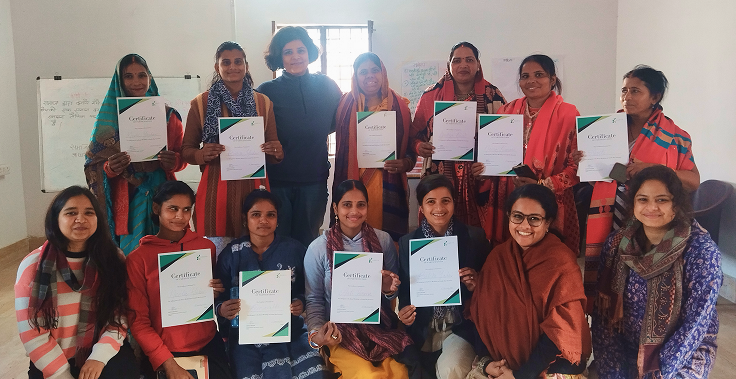
Field Training for Project Sanmati
Project Sanmati is one of Karya’s longest-running and most impactful initiatives. Supported by the Gates Foundation, the project addresses a critical question for inclusive AI: how can women serve as both the workforce and the context-force in mitigating gender bias in Indian-language datasets?
Over the past two and a half years, we have worked with 20,000 low-income women across eight states to co-create frameworks for identifying gender bias across six Indian languages—Hindi, Marathi, Bhojpuri, Malayalam, Telugu, and Bengali. Through completing gender-focused tasks on the Karya platform, women acted as co-designers and evaluators in the data value chain, strengthening both data quality and community agency. This work resulted in a corpus of over 15,000 gender-aware sentences, which will underpin our next and final project phase: the development of a multilingual benchmarking tool for gender bias in Indian-language datasets.
Sanmati will be highlighted in a special panel, Women, Work, and the Future of AI, at the AI Impact Summit hosted by the Government of India in Delhi later this February.
Women’s judgments became data that is now aiming to underpin gender-aware AI evaluation
Community Evaluations
Samiksha
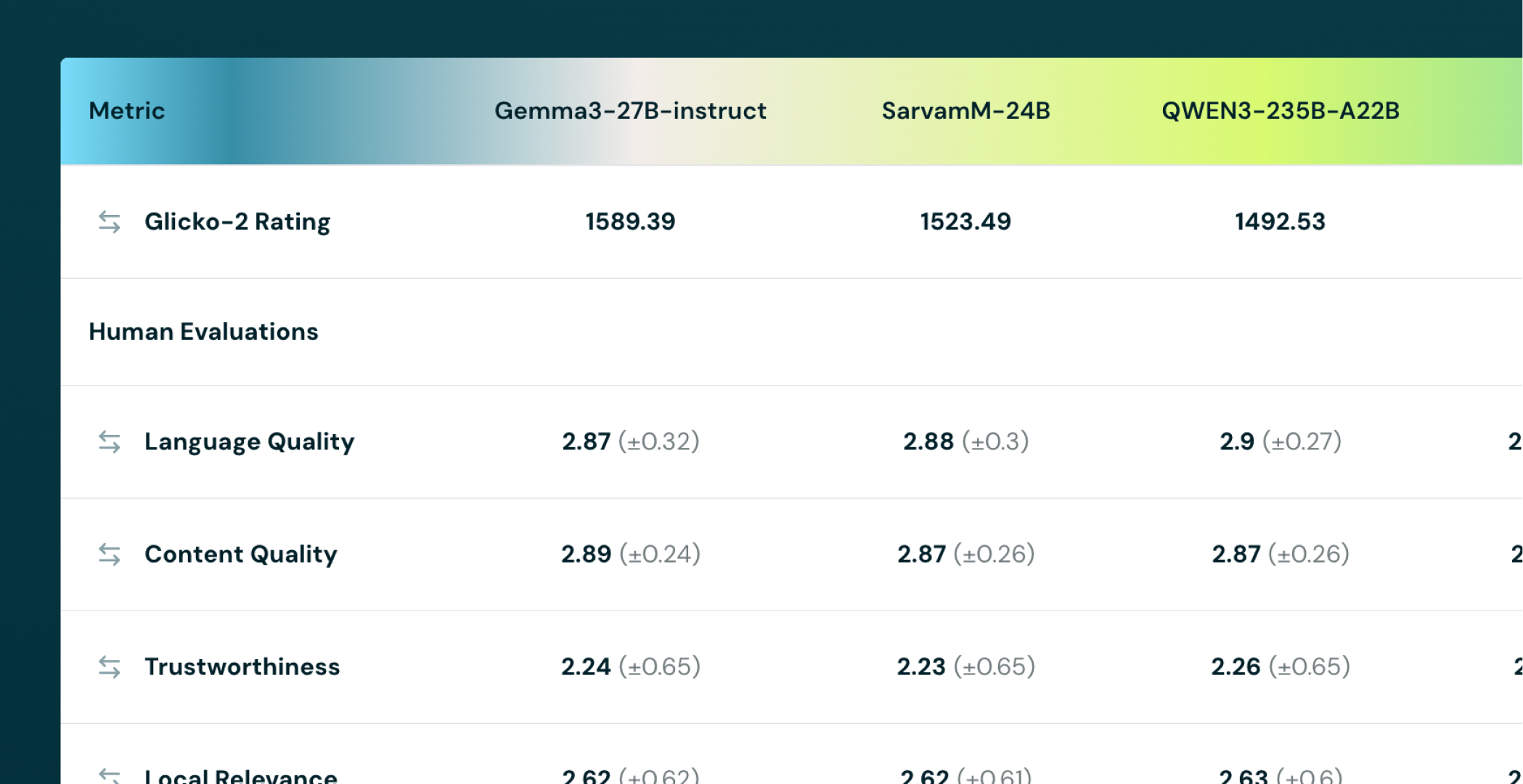
Samiksha Leaderboard
As AI systems begin to shape everyday decisions across India, questions of usefulness, safety, and trust cannot be answered by abstract benchmarks alone. Samiksha was developed in response to this gap. It recognises that people most affected by model failures—those seeking guidance on health, education, finance, or legal matters—rarely have structured ways to participate in how AI systems are evaluated.
Samiksha is a multilingual evaluation pipeline that tests large language models against real, everyday Indian contexts, grounded in eleven Indian languages and four high-impact domains. It combines expert consultation, paid contributions from end users, and large-scale automated evaluation to surface where systems fall short in clarity, cultural fit, trustworthiness, and local relevance. By embedding lived experience directly into evaluation, Samiksha shifts assessment from laboratory assumptions to public life, contributing tools intended for use by researchers, policymakers, and model builders working in India’s AI ecosystem.
Samiksha will be showcased at the AI Impact Summit hosted by the Government of India in Delhi later this February.
Samiksha exists because model failures are felt most by those least represented in evaluation.
Culturally grounded AI for learning
Kahani
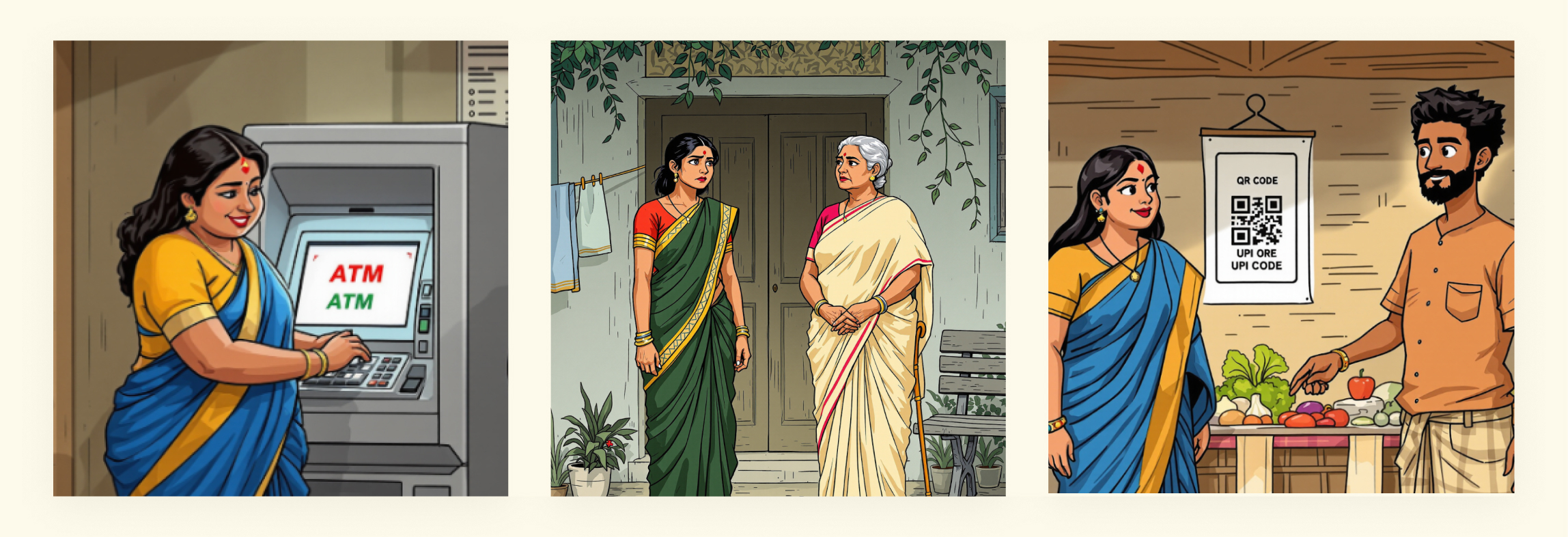
Images generated with Kahani
Generative AI has expanded access to educational content, but it often struggles with cultural accuracy. In many contexts, particularly in the Global South, AI-generated stories reproduce settings, behaviours, or assumptions that feel unfamiliar or implausible to local learners. For educators, these gaps can undermine trust and reduce the effectiveness of teaching tools.
Kahani was developed by our long-time partners at Microsoft Research to address this challenge by keeping local practitioners at the centre of the creative process. The framework uses a staged, agent-based approach to storytelling, supported by human oversight at every step. Educators can intervene to refine language, gestures, settings, or visual details, ensuring stories remain grounded in local realities before they are finalised.
In 2025, a pilot in Kerala focused on financial literacy demonstrated the approach’s potential. Participants showed measurable improvements in learning outcomes, and all reported that the stories reflected their everyday experiences. The project lowered barriers for educators to create culturally resonant materials without specialised technical skills.
Kahani enables educators to create learning materials that reflect how people actually live, speak, and learn.
The Indigenous Recipes Project
From Hands that Feed
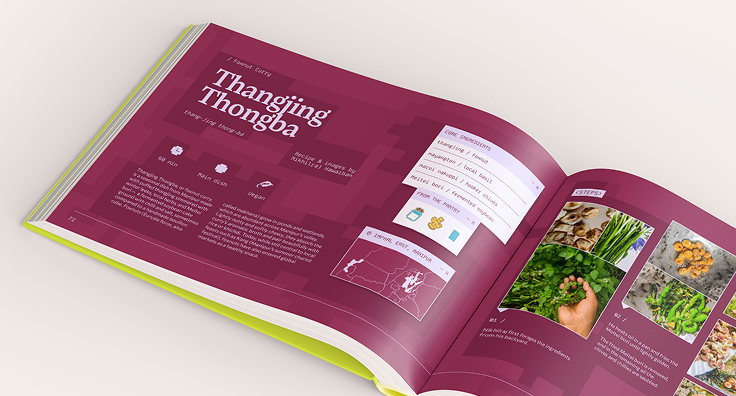
A recipe spread from the book
In 2025, the Indigenous Recipe Project culminated in the publication of a richly documented recipe book, From Hands that Feed, capturing culinary knowledge from communities across India in their own languages. Contributors recorded recipes alongside the practices, seasonal rhythms, and local reasoning that surround them—transforming everyday knowledge into a shared cultural record.
The project treated food as more than instruction. Each entry reflected how families preserve health, manage resources, and pass knowledge across generations. Contributors were paid for their work and credited by name, reinforcing the project’s commitment to ethical documentation.
The resulting book stands as both a cultural archive and a reminder that many forms of knowledge remain underrepresented in the datasets that shape technology today.
The resulting book stands as both a cultural archive and a reminder that many forms of knowledge remain underrepresented in the datasets that shape technology today.
I was a student and depended on financial support. With Karya, I could earn money to cover my education expenses. I travelled from village to village to train people on the app and carefully validate their work. Within my community I received a lot of respect, love, and trust. Both my family and community have been positive. After gaining a better understanding of Karya, they offered constructive feedback, assisted me in reaching more individuals and supported me throughout my work. I became more confident, financially independent, and gained new skills in AI and technical tools.
Achat Wangsu, Arunachal Pradesh , Data Validator
USD 3000 earned so far

Looking Ahead
With Impact & Scale
In 2025, we formalised a clearer way of understanding how digital work contributes to worker wellbeing over time. Drawing on income data, worker voice surveys, and field engagement, we introduced a staged framework to distinguish different levels of impact.
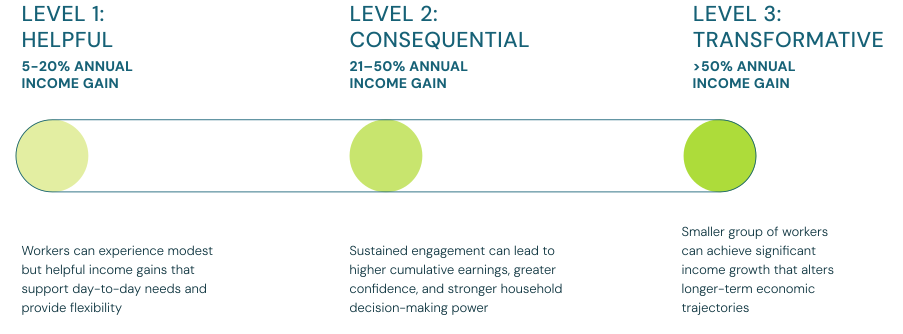
This framework underpins the Impact and Scale Program, allowing Karya to segment support more intentionally and track progress with greater precision. The focus ahead is on strengthening measurement, deepening engagement, and ensuring that more workers move steadily from helpful gains toward consequential change.
Today, Karya is helpful for most of our workers and consequential for some of them; over the next two years, we want Karya to be consequential for all workers and transformative for the most vulnerable of them.
“I couldn’t work after marriage because my daughter was very young. We had no steady income. Karya helped me use my time well and earn from home. I could work at my own pace while taking care of my child. It’s increased my self-confidence and I learned to use new technology like Google Gemini, and ChatGPT.
In my community, people now see Karya as a trusted way to earn from home.”
- Shraddha Suryavanshi, Maharashtra (USD 348 earned so far)
Thank You!
End of The Year
2025